Tag: SEO

  • Boost Your Online Presence: How SEO and Custom Web Design Work Together

    Boost Your Online Presence: How SEO and Custom Web Design Work Together

    Boost Your Online Presence: How SEO and Custom Web Design Work Together

    Your website might be attracting visitors, but are they finding you on Google? Many businesses overlook how closely SEO and custom web design must work together to boost search visibility. When these two elements sync, your online presence doesn’t just improve—it becomes a powerful tool that draws the right audience and keeps them engaged. Let’s break down how combining SEO with tailored web design can put your business ahead in digital marketing. Check out this link for more insights: [https://www.operationtechnology.com/blog/seo-web-design-the-relationship-you-should-know-about/].

    Power of SEO and Web Design

    In today’s digital world, having a website isn’t enough. Your site needs to shine on search engines. Let’s explore how merging SEO with custom web design can elevate your visibility.

    Enhancing Search Visibility

    When SEO and web design work together, your site gets noticed. A well-designed site with proper SEO means higher rankings on search engines. Imagine your site appearing on the first page of Google. That’s the power of this dynamic duo.

    • Structured Data: It helps search engines understand the content better. This clarity can boost your rankings.

    • Mobile Responsiveness: Over 50% of users browse on mobile. A responsive design ensures they stay longer, reducing bounce rates.

    • Fast Loading Speed: A site that loads in under 3 seconds keeps users engaged. It also pleases search engines, improving your rank.

    Learn more about this relationship here.

    Creating a Strong Online Presence

    A cohesive strategy ensures your online presence is not just seen but remembered. When your website looks good and functions well, visitors stick around. This isn’t just about aesthetics; it’s about creating meaningful interactions.

    • Consistent Branding: Your website should reflect your brand’s identity. Consistency builds trust and recognition.

    • Engaging Content: Content that speaks to your audience’s needs holds their attention. Use relevant keywords naturally to guide them.

    • Easy Navigation: A user-friendly structure means visitors find what they need quickly, leading to higher satisfaction.

    Discover more on why this synergy is essential here.

    Building a User-Centric Website

    Prioritizing the user’s experience on your site is key. It’s not just about getting visitors; it’s about keeping them engaged.

    Importance of User Experience

    User experience (UX) is about more than design. It’s how users feel when they interact with your site. A positive experience keeps them coming back.

    • Intuitive Layout: Visitors should navigate your site effortlessly. Think of your site as a map; the clearer it is, the easier it is to follow.

    • Accessibility: Your site should be accessible to everyone. This inclusivity broadens your audience reach.

    Learn how to integrate SEO into your design here.

    Strategies for Website Optimization

    Optimizing your website is a continuous process. Here’s how you can ensure your site is always performing at its best:

    1. Update Content Regularly: Fresh content keeps your site relevant and encourages repeat visits.

    2. Use Analytics: Regularly check analytics to understand user behavior and adjust your strategies.

    3. A/B Testing: Test different elements to find what works best. This approach helps improve conversions and engagement.

    For more insights on the role of SEO in web design, visit this site.

    Real-World Success Stories

    Seeing theory in action brings concepts to life. Let’s look at how real businesses have thrived by integrating SEO and custom web design.

    Client Case Study: Boosted Visibility

    One of our clients, a local bakery, saw a 40% increase in traffic after revamping their website with SEO-focused design. Their story shows the impact of combining these elements.

    • Targeted Keywords: We focused on local SEO keywords to attract nearby customers.

    • Visual Appeal: A fresh, clean design made their site inviting, aligning with their brand image.

    Testimonials from Satisfied Clients

    Our clients can’t stop raving about the transformation. Here’s what they say:

    • “Our site traffic doubled in just three months!”

    • “We’ve seen a significant boost in online orders since the redesign.”

    🌐✨

    By leveraging SEO and custom web design, you can transform your website from a simple online presence to a powerful marketing tool. Take the step today and see the difference it makes.

  • Unlocking Success: Best Practices for Creating Accessible Websites that Boost User Experience and SEO

    Unlocking Success: Best Practices for Creating Accessible Websites that Boost User Experience and SEO

    Unlocking Success: Best Practices for Creating Accessible Websites that Boost User Experience and SEO

    Most websites miss a huge opportunity by ignoring accessibility. When your site isn’t easy for everyone to use, you’re not just losing visitors—you’re losing search traffic too. In this post, you’ll learn straightforward best practices for website accessibility that improve user experience and boost SEO, helping your business stand out online with support from Eclipse Digital. Learn more about the connection between SEO and accessibility here.

    Importance of Website Accessibility

    Website accessibility is a game-changer, not just for inclusivity but also for boosting your site’s effectiveness. It can make a world of difference in how users interact with your content and how search engines rank it.

    Boosting User Experience

    A more accessible website means happier visitors. When users can navigate easily, find what they need, and interact without hassle, they are more likely to stay. Imagine a visitor with visual impairments using a screen reader. If your site has clear headings and alternative text for images, they can navigate seamlessly. By making these adjustments, you create a welcoming space for everyone, increasing the likelihood of repeat visits and positive word-of-mouth.

    An example of how accessibility can enhance user experience is through simplified site navigation. Users appreciate when they can easily find your contact page or product listings. This simplification can reduce bounce rates and increase the time spent on your site—key factors in user satisfaction. The benefits of these adjustments are not just felt by users but also by your business’s bottom line.

    Enhancing Search Engine Optimization

    Accessibility is not just a user concern; it’s an SEO opportunity. Search engines favor sites that cater to all users, awarding them with better rankings. When your website is accessible, you’re ticking boxes for both users and search engines. This dual advantage means higher visibility in search results and more organic traffic.

    Think about how search engines work. They read your site much like a screen reader does. So, if your site is optimized for accessibility, it’s likely optimized for search engines too. This includes having descriptive alt text for images, which not only aids users but also helps your site appear in image searches. You can delve deeper into these best practices at Siteimprove.

    Best Practices for Accessible Web Design

    Incorporating accessibility into your web design is both straightforward and rewarding. It enhances the user experience, boosts your SEO, and positions your brand as inclusive and forward-thinking.

    Simplifying Navigation

    Making navigation intuitive is crucial for usability. Visitors should never feel lost on your site. Start by streamlining your menu options. Limit them to the essentials, and use clear, descriptive labels. This not only helps users find what they’re looking for but also improves your site’s search engine ranking.

    Consider using a consistent layout and placing the most important information upfront. For example, your contact information should be easy to find on every page. Using breadcrumb trails can also aid users in understanding their location on your site. A study found that simplifying navigation can increase conversion rates by up to 30%. A user-friendly navigation structure is a win-win for both visitors and search engines.

    Ensuring Text Readability

    Text readability is another cornerstone of accessibility. If users struggle to read your content, they will likely leave your site. Start by choosing a font that is easy to read, like Arial or Verdana, and maintain a font size of at least 16px. Use high-contrast color schemes to ensure text stands out against the background.

    Breaking up text into shorter paragraphs and using bullet points for lists makes your content easier to digest. Remember, a clean and clear page is more inviting. You can find more actionable tips on enhancing readability at UNC’s Web Guide.

    Partnering with Eclipse Digital

    Navigating the path to accessibility can be challenging, but you don’t have to do it alone. Eclipse Digital offers expertise and tailored solutions to make your website shine.

    Tailored Strategies for Your Business

    Every business is unique, which is why Eclipse Digital takes a customized approach. We work with you to understand your goals and challenges, creating strategies that align with your vision. Whether it’s redesigning your site for better accessibility or optimizing it for search engines, our solutions are crafted to meet your specific needs.

    Our agile service model allows us to quickly adapt to changes, ensuring your website remains current and competitive. This flexibility is part of what sets us apart from larger agencies. With Eclipse Digital, you have a partner who is as invested in your success as you are.

    Success Stories and Client Testimonials

    Our track record speaks for itself. From small businesses to larger enterprises, we’ve helped a range of clients improve their online presence. One satisfied client noted, “Working with Eclipse Digital was a game-changer for us. Our website is now accessible and ranks better in search results.”

    Another client shared how their website traffic increased by 50% after implementing our accessibility recommendations. These success stories are a testament to the effectiveness of our methods and the dedication of our team. Learn more about how accessibility impacts SEO and usability from Lyssna.

    🌐✨

    By investing in website accessibility, you’re not just improving user experience and SEO—you’re opening doors to new opportunities and ensuring your business is inclusive and forward-thinking. Eclipse Digital is here to help you every step of the way, turning your website into a tool for growth and success.

  • Why Website Speed is Essential for Google Rankings and User Retention

    Why Website Speed is Essential for Google Rankings and User Retention

    Why Website Speed is Essential for Google Rankings and User Retention

    Your website could be losing visitors before it even fully loads. Slow page load time doesn’t just frustrate users—it drags down your Google rankings and hurts your user retention. In this post, you’ll see why website speed is a crucial part of SEO and how improving it can strengthen your online presence and keep customers coming back. For more insights, check out this article.

    Importance of Website Speed

    Your website’s speed plays a vital role in keeping users engaged and boosting your site’s performance. Let’s explore how this affects your Google rankings and user retention.

    Impact on Google Rankings

    Google uses page speed as a ranking factor, which means a slow website can push you down in search results. A one-second delay can reduce page views by 11%. To improve your Google rankings, focus on speeding things up. The faster your site, the more likely you’ll climb the search engine ladder. Check out this Reddit discussion for more insights.

    Influence on User Retention

    Speed not only affects rankings but also user retention. A slow site frustrates visitors, causing them to leave. If your site loads quickly, users are more likely to stick around and explore. This results in higher retention rates and better user satisfaction. In fact, a 53% chance exists that users will leave if a mobile site takes longer than three seconds to load. Learn more about the connection between speed and retention in this LinkedIn article.

    Enhancing User Experience

    A fast website ensures a smooth browsing experience. Let’s look at how reducing page load time and boosting your online presence can make all the difference.

    Reducing Page Load Time

    Focusing on reducing page load time enhances user satisfaction. Simple tweaks, like optimizing images and using a content delivery network (CDN), can drastically cut down load times. As a result, your visitors will have a smoother experience, leading to increased engagement. Remember, every second counts in keeping users happy and on your site.

    Boosting Online Presence

    A speedy site doesn’t just improve user experience; it boosts your online presence. When your site ranks higher and retains more users, your brand becomes more visible and trustworthy. This increased visibility can lead to more conversions and business growth. Discover more about why speed matters for local search in this article.

    Practical Solutions for Businesses

    Businesses can benefit from practical solutions to enhance website speed. Let’s dive into SEO services and a case study showcasing increased traffic and satisfaction.

    SEO Services for Speed

    Leveraging SEO services can enhance your website speed and improve your rankings. These services often include technical audits, image optimization, and caching solutions to ensure your site is as fast as possible. By focusing on speed, you can improve your search engine performance and user engagement.

    Case Study: Increased Traffic and Satisfaction 🚀

    Consider a business that optimized its website speed, resulting in a 30% increase in traffic and improved user satisfaction. By focusing on faster load times, they saw more visitors and higher conversion rates. This example highlights the powerful impact of prioritizing speed. For more information, check out this article.

    By understanding the importance of website speed, you can take steps to improve your site’s performance, boosting your Google rankings and user retention. Making these changes will enhance your online presence and support your business growth.

  • Is It Time for a Website Makeover? Signs Your Site Needs an Upgrade

    Is It Time for a Website Makeover? Signs Your Site Needs an Upgrade

    Is It Time for a Website Makeover? Signs Your Site Needs an Upgrade

    Your website isn’t just a digital billboard—it’s where your business earns trust and drives sales. If your site feels slow, outdated, or buried in search results, those issues are costing you customers. Spotting the signs your website needs an upgrade can save you from falling behind and help you connect better with your audience. Let’s break down the key signals that tell you it’s time for a website upgrade—and how smart web design can boost your user experience and site performance. For more insights, check out this guide.

    Signs You Need a Website Upgrade

    When your website isn’t performing, it’s not just a technical issue—it’s a barrier to your business growth. Let’s explore some telltale signs that it’s time for a refresh.

    Outdated Design Elements

    First impressions matter. If your website looks like something from the early 2000s, you might be turning away potential customers. An outdated design doesn’t just affect aesthetics; it can also impact user trust. People expect modern, clean, and intuitive interfaces. If your site feels cluttered or visually unappealing, it’s time to update. A well-designed site reflects your professionalism and keeps users engaged.

    Imagine visiting a store with faded signage and cluttered aisles. You’d likely leave quickly, right? The same goes for websites. Clean lines, cohesive color schemes, and responsive layouts are key. Your site should guide visitors effortlessly to the information they need. If your design isn’t pulling its weight, consider a makeover.

    Slow Site Performance

    It’s no secret that slow websites frustrate users. If your pages take more than a few seconds to load, you’re likely losing visitors. Speed is crucial. People expect instant access to information. A sluggish site can lead to high bounce rates and lost sales. One second of delay can reduce conversions by 7%. That’s a significant loss over time.

    To check your site’s speed, use online tools like Google PageSpeed Insights. If your site lags, it might be time to streamline code, optimize images, or even switch hosting providers. A faster site isn’t just better for users; it can boost your search engine ranking too. In a fast-paced world, speed is a competitive advantage.

    Poor Mobile Responsiveness

    With more people browsing on their phones, a mobile-friendly website is essential. If your site doesn’t adapt to different screen sizes, you’re missing out on traffic. Picture this: you visit a site on your phone, and text overlaps or images don’t load properly. Frustrating, right? That’s how users feel with non-responsive sites.

    A responsive design ensures your site works smoothly across devices. Test your site on various screens. If navigation is tricky or content doesn’t fit, it’s time for a redesign. Mobile users expect easy interaction—if they don’t get it, they’ll move on to a competitor. Ensuring mobile compatibility can widen your reach and enhance user satisfaction.

    Enhancing User Experience

    A great website isn’t just about looks—it’s about how users feel when they navigate it. Improving the user journey can significantly impact engagement and conversion rates.

    Simplifying Navigation

    Imagine walking into a maze when all you want is a straightforward hallway. Complex website navigation can feel just like that. Clear, intuitive menus help users find what they’re looking for without hassle. Use descriptive labels and logical structures. A simple, well-organized navigation bar can reduce the time users spend searching for information, making their visit more pleasant.

    To simplify, start by listing your main pages and grouping related content. Use dropdowns sparingly and test your navigation with real users. If they’re getting lost, it’s time to simplify. Happy users are likely to stay longer and explore more.

    Improving Visual Appeal

    Looks aren’t everything, but they sure help. An appealing website encourages users to stay longer and explore. Bright colors, high-quality images, and a harmonious layout can make a huge difference. Use visuals to guide attention to key areas like calls to action or special offers.

    Your website is an extension of your brand. Ensure that colors, fonts, and imagery align with your brand identity. Consistency builds trust and familiarity. If your site feels visually disjointed, it might be time to refresh its look.

    Boosting Your Online Presence

    Your website is the cornerstone of your digital presence. Optimizing it can set your business apart in a crowded market.

    SEO Best Practices

    A beautiful site means little if no one visits it. Search engine optimization (SEO) helps your site rank higher in search results. This means more visibility and traffic. Use relevant keywords naturally throughout your content. Optimize meta tags and ensure your site is mobile-friendly—search engines love that.

    Quality content is key. Create informative, engaging articles or blog posts that answer user questions. Link to reputable external sources, like this article, to boost credibility. Regular updates keep your site fresh and relevant. SEO isn’t a one-time task—it’s an ongoing process that pays dividends over time.

    Engaging Content Strategy

    Content is king, but engagement is queen. Crafting a strategy that keeps users coming back can boost your site’s success. From blog posts to videos, offer diverse content that appeals to your audience’s interests. Use storytelling to connect on an emotional level, and encourage interaction through comments or shares.

    Here’s the key insight: focus on your audience’s needs and pain points. Provide solutions, showcase expertise, and build a community. Engaged users are more likely to become loyal customers. Consistent, valuable content strengthens your relationship with your audience.

    Transforming your website isn’t just about keeping up with trends—it’s about staying ahead of the curve. A well-designed, fast, and engaging site can boost your presence and drive business growth. The longer you wait, the more opportunities you might miss. So, take the leap today and see the difference a fresh website can make. 🌟📈✨

    For more on why a website upgrade is essential, check out this article.

  • Unlock Agile Marketing: Strategies to Adapt and Win in Today’s Market

    Unlock Agile Marketing: Strategies to Adapt and Win in Today’s Market

    Unlock Agile Marketing: Strategies to Adapt and Win in Today’s Market

    You’ve tried digital marketing plans that looked good on paper but failed when the market shifted. Staying ahead means more than one-size-fits-all tactics—it demands agile marketing that adapts fast and keeps your business visible. In this post, you’ll find clear strategies from Eclipse Digital to sharpen your SEO, custom web design, and flexible marketing solutions so you can respond quickly and win in today’s market. For more insights, check out this resource on agile marketing strategies.

    Understanding Agile Marketing

    Agile marketing is like a secret weapon in a marketer’s toolkit. It ensures your strategies evolve with the marketplace. But what exactly does this mean?

    What is Agile Marketing?

    Imagine a marketing approach that changes as quickly as market trends. That’s agile marketing. This method shifts focus from the traditional long-term planning to short-term adaptability. Agile marketing consists of small, iterative campaigns that respond quickly to changes in consumer behavior. It’s like having a GPS that reroutes when there’s traffic, ensuring you always reach your goal efficiently. Learn more about its foundations here.

    Key Benefits for Businesses

    Why choose agile marketing? For starters, it keeps you ahead. When you can pivot quickly, you outpace competitors stuck in outdated strategies. Another benefit is increased collaboration. Agile marketing fosters teamwork, leading to creative solutions. Lastly, it boosts efficiency. By focusing on what’s working, you save time and resources. Businesses like Eclipse Digital use these principles to deliver tailored solutions with proven results.

    Building an Agile Strategy

    Crafting an agile strategy might seem daunting, but it’s simpler than you think. Here’s how you can shape your marketing to be as nimble as possible.

    Adapting to Market Changes

    Adapting swiftly can feel like trying to hit a moving target. But with agile marketing, you’re always ready to aim. Start by conducting regular market analysis. This helps you spot trends before they become mainstream. Next, prioritize customer feedback. Their insights are gold, guiding where your strategy should head next. Finally, keep your team flexible. Encourage open communication and quick decision-making.

    Creating Flexible Marketing Solutions

    Flexibility is the backbone of agile marketing. To achieve it, build versatile campaigns that can be adjusted on the fly. Use data analytics to monitor performance and make informed changes. Testing different strategies helps you find what resonates best with your audience. Remember, it’s not about drastic overhauls but subtle tweaks. Eclipse Digital has mastered this art, delivering personalized solutions that respond to market demands.

    Enhancing Online Presence

    Now, let’s dive into boosting your online presence. With agile marketing, you can effectively engage your audience and stand out in digital spaces.

    Effective SEO Techniques

    SEO is crucial, but it’s not a one-and-done task. Think of it as gardening. Regular updates to keywords, content, and backlinks nurture growth. Keep an eye on SEO trends and algorithm updates to stay relevant. Also, explore local SEO to connect with nearby audiences. Eclipse Digital excels in this realm, offering strategies that elevate rankings and visibility. Dive deeper into SEO essentials on this blog.

    Custom Web Design Solutions 🚀

    Your website is your digital storefront. It needs to be inviting and functional. Start with a design that reflects your brand’s personality. Ensure it’s mobile-friendly and easy to navigate. Incorporate engaging content that holds attention and prompts action. Regularly update your design to match changing consumer preferences. Eclipse Digital’s custom web design services ensure a blend of creativity and functionality, helping your brand leave a lasting impression. For more insights, explore agile marketing strategies.

    With these strategies, your business is not just another player but a leader in the digital world. Embrace agile marketing to adapt and thrive, no matter how the market shifts.

  • AI-Powered Local SEO: 7 Ways Service Businesses Are Crushing Competition in 2025

    AI-Powered Local SEO: 7 Ways Service Businesses Are Crushing Competition in 2025

    The local SEO landscape has been completely transformed in 2025. Service businesses that cling to outdated optimization tactics are watching their competitors dominate search results while they fade into obscurity. The game-changer? Artificial intelligence has revolutionized how smart businesses approach local search: and the results are staggering.

    Companies leveraging AI-powered local SEO strategies are reporting 150% ROI increases and conversion rates jumping to 31%. Meanwhile, businesses stuck in the old playbook are losing ground fast. The gap between AI-adopters and traditional approaches isn't just widening: it's becoming insurmountable.

    Here are the seven AI-powered strategies that are separating winners from losers in local search competition.

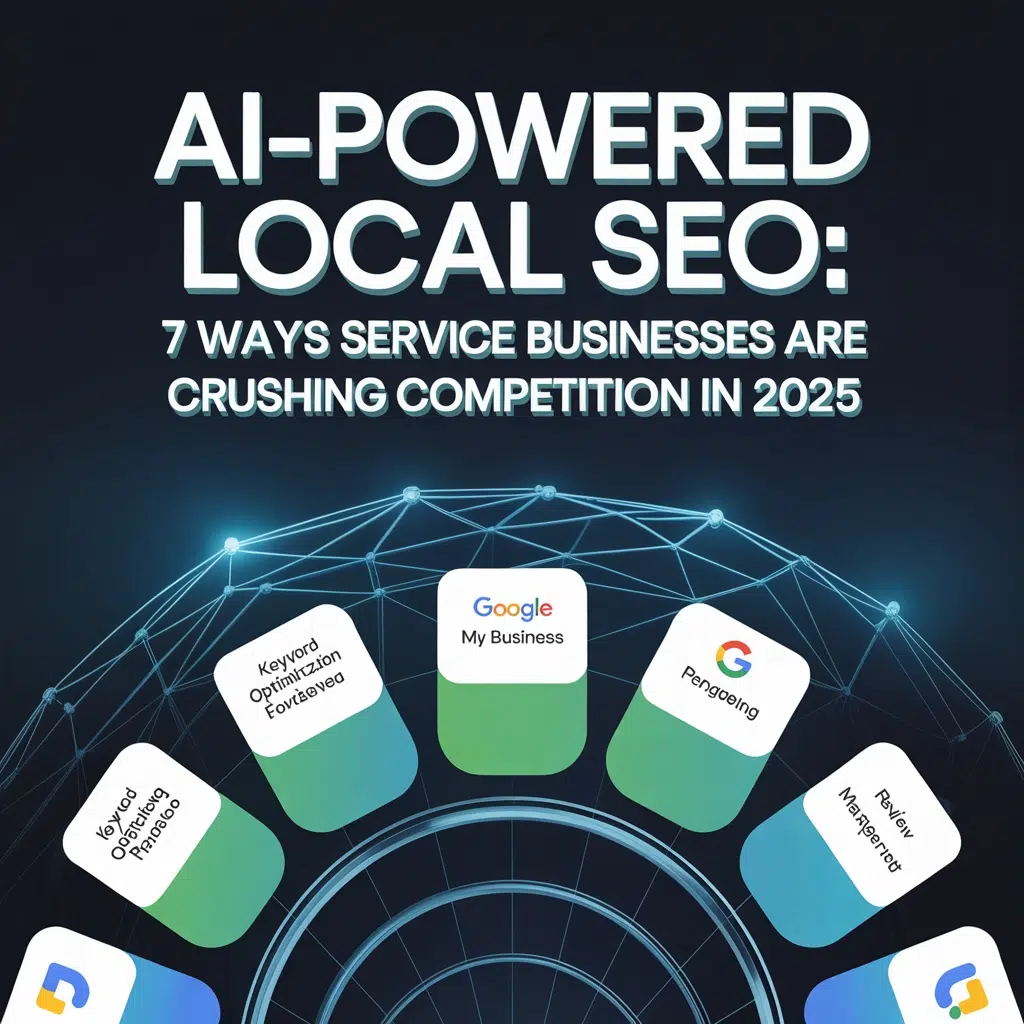
    1. AI-Enhanced Keyword Research That Actually Works

    Traditional keyword research is dead. Guessing what your customers search for based on intuition or basic tools leaves money on the table. AI-powered platforms like SEMrush, SurferSEO, and MarketMuse now analyze massive datasets to reveal exactly what local customers are searching for: and more importantly, what your competitors are missing.

    image_1

    These AI tools don't just find keywords; they scan competitor content to identify performance gaps and differentiation opportunities. Instead of competing for oversaturated terms, AI reveals untapped local search phrases with high intent and low competition.

    Service businesses using AI keyword research are discovering hyper-specific local queries their competitors never considered. While your competition fights over "plumber near me," AI helps you dominate searches like "emergency pipe repair downtown Minneapolis Sunday evening."

    The technology processes search pattern data in real-time, adapting recommendations as local search behavior shifts. This means your keyword strategy evolves continuously instead of becoming stale after three months.

    2. Real-Time Strategy Adaptation That Never Sleeps

    Static SEO strategies are a relic of the past. In 2025, machine learning algorithms track ranking signals 24/7 and automatically adjust optimization tactics based on performance data. This isn't theory: it's happening right now.

    AI systems monitor your local search rankings, competitor movements, and algorithm updates simultaneously. When Google tweaks its local ranking factors (which happens constantly), AI-powered tools immediately recalibrate your strategy without human intervention.

    This real-time adaptation means service businesses never fall behind due to delayed responses to ranking changes. While competitors scramble to understand why their rankings dropped, AI-powered businesses maintain visibility through continuous optimization.

    3. Google Business Profile Automation That Dominates

    Your Google Business Profile is the foundation of local SEO success. But manually managing profile optimization, posts, and customer interactions is time-consuming and inconsistent. AI has solved this problem completely.

    Automated AI systems now handle profile updates, suggest strategic improvements, and manage customer engagement without missing a beat. These tools ensure your business information stays accurate, posts remain fresh, and profile elements align with Google's ranking preferences.
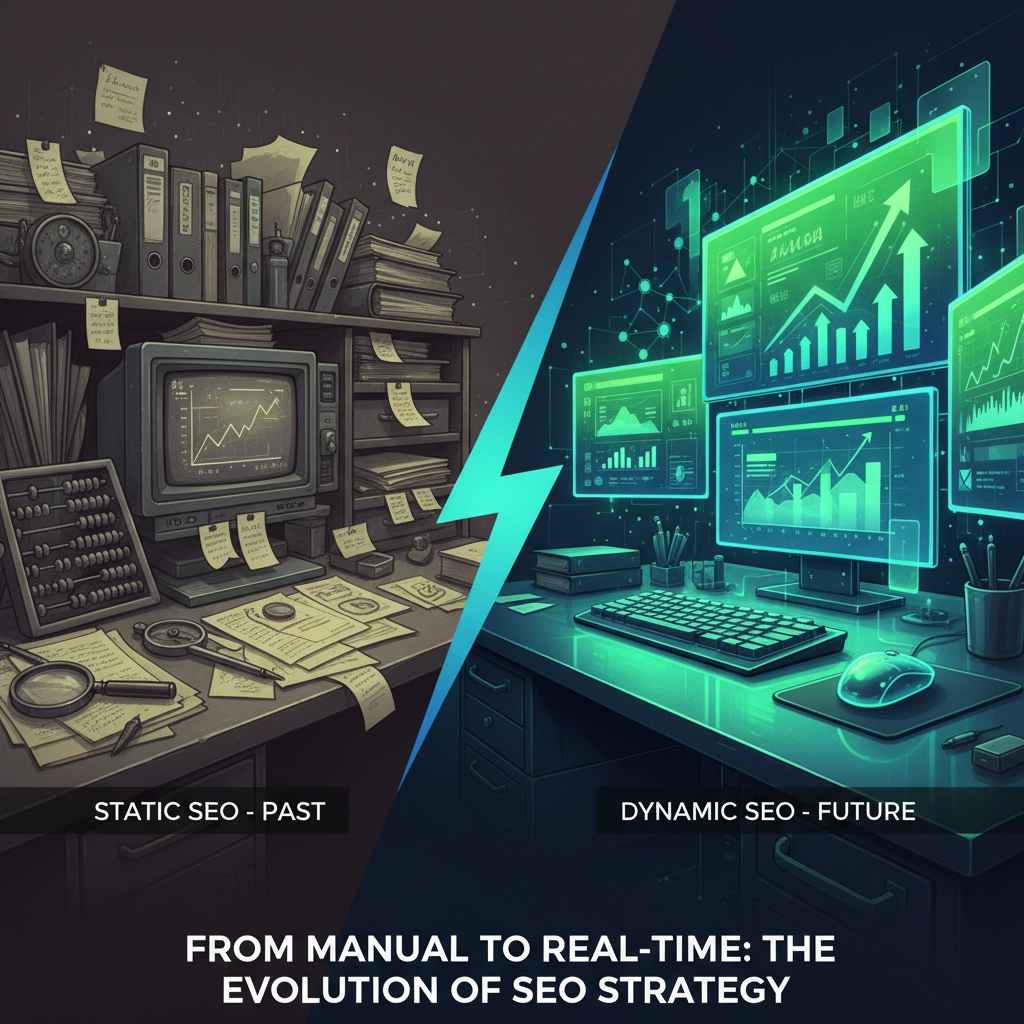
    image_2

    The results are undeniable. Service businesses using AI-powered Google Business Profile management see higher visibility in local map results and increased customer interactions. The technology maintains profile activity levels that Google rewards while freeing up your time for actual business operations.

    AI also optimizes posting schedules, selects the most engaging content formats, and responds to customer questions using natural language processing that feels genuinely human.

    4. Sentiment Analysis That Transforms Reviews into Revenue

    Here's a shocking statistic: 98% of people read online reviews for local businesses. But most service companies only track star ratings and review counts: completely missing the goldmine of customer intelligence hidden in review content.

    AI-driven sentiment analysis goes deeper than surface metrics. This technology analyzes the emotional context behind customer reviews, identifying specific pain points, satisfaction drivers, and competitive advantages buried in review text.

    Instead of just knowing you have 4.2 stars, AI reveals that customers consistently praise your response time but criticize your pricing transparency. Armed with this intelligence, you can address specific issues and amplify positive experiences strategically.

    Service businesses using review sentiment analysis are making data-driven improvements that directly impact customer satisfaction and local search rankings. Reviews become a competitive intelligence tool instead of just a vanity metric.

    5. Voice Search Optimization for the AI Era

    Voice search through Siri, Alexa, and Google Assistant has fundamentally changed how customers find local services. People don't type "pizza delivery" anymore: they ask "Where can I get the best pizza delivered in Brooklyn tonight?"

    image_3

    AI helps service businesses optimize for these conversational queries by understanding natural language patterns and search intent. The technology identifies how people actually speak when searching for your services, not how they type.

    This shift is critical because voice search results often provide only one recommendation. Being the AI's top choice for local queries means dominating an entire category of customer searches. Service businesses optimizing for voice search are capturing customers their competitors never even reach.

    AI also helps structure content in formats that voice assistants can easily interpret and present to users, positioning your business as the authoritative answer for local service queries.

    6. Generative Engine Optimization for AI Search Results

    The emergence of AI-powered search responses has created an entirely new optimization category: Generative Engine Optimization (GEO). This is beyond traditional SEO: it's optimization specifically for AI-generated search results and recommendations.

    When potential customers ask AI assistants about local services, the AI generates responses based on available data about businesses in the area. Service companies using GEO strategies ensure their information appears prominently in these AI-generated recommendations.

    This involves structuring website content, business information, and online presence in formats that AI systems can easily interpret and present. Businesses mastering GEO are appearing in AI search summaries while competitors remain invisible.

    The competitive advantage is enormous because most service businesses haven't even heard of GEO, let alone implemented strategies for it.

    7. Hyper-Local Intelligence That Crushes Competition

    AI enables micro-local targeting that would be impossible through manual analysis. The technology identifies specific neighborhoods, service areas, and local opportunities based on search pattern data and competitor gaps.

    Instead of competing citywide, AI helps service businesses dominate specific geographic micro-markets. This could mean owning all plumbing searches in a particular zip code or becoming the go-to electrical service for specific neighborhoods.

    image_4

    AI tools provide continuous competitor monitoring at the local level, revealing when competitors enter or exit markets, change pricing strategies, or modify service offerings. This intelligence enables strategic positioning that keeps you ahead of competitive threats.

    The technology also identifies seasonal patterns, local events, and community trends that create temporary service demand spikes. Service businesses using this intelligence can adjust their local SEO strategies to capture these opportunities automatically.

    The Competitive Reality Check

    Service businesses not embracing AI-powered local SEO strategies are falling behind irreversibly. The technology gap between AI-adopters and traditional approaches grows wider every month.

    Companies still manually managing keyword research, profile optimization, and competitor analysis are operating with 19th-century tools in a 21st-century marketplace. Meanwhile, AI-powered competitors are capturing more customers, generating higher revenues, and building stronger market positions.

    The choice is stark: evolve with AI-powered local SEO or watch competitors dominate your market while your business becomes increasingly invisible to local customers.

    Don't let outdated strategies cost you customers. The service businesses thriving in 2025 all have one thing in common: they've embraced AI-powered local SEO to dominate their competition. The technology exists, the strategies are proven, and the results speak for themselves.

    Your competitors are already using these tools. The question isn't whether you should adopt AI-powered local SEO: it's how quickly you can implement these strategies before you fall too far behind to recover.